|
REFLECTIVE ESSAYS - TUNINGS
 Introduction Introduction
These reflective essays or Tunings explore new habits of mind
that bring us into attunement with the creative process. There
is a Chinese proverb that says "A bird does not sing
because it has the answer. It sings because it has a song".
These words capture my hope that
these Tunings may also set free the human spirit and sing
into existence our own song of the imagination. And that this
song may help us discover what is natural to our own sense
of being and hold the candle for navigating a more complex
world.
Transforming Leadership
Through the Power of the Imagination
Michael Jones Reflective Essay - Summer
2010
(To be published in Building Leadership Bridges /Leadership
for Transformation in a partnership between The International
Leadership Association and Jossey - Bass Publishers, Autumn
2010)
We are on the threshold of a renaissance in leadership
practice-the challenges ahead are not technical but transformational.
Letting go of our industrial age myths will require not
just intellectual understanding but the full power of the
imagination.
Michael Jones
My Business is Circumference
My business is circumference, Poet Emily Dickinson writes.
This is also the business of leadership.
To understand the significance of circumference we need to
acknowledge the new mindset required of leaders for integrative
whole mind learning. As we struggle with new discontinuities,
fragmentation and sudden change it is vital for leaders to
think in more complex and holistic ways. This involves a shift
in focus from a narrow and reductive emphasis on individualism
based upon an industrial model of managing where the leader
is the strong dependable self-made individual or hero towards
a style of leading which expands the circumference within
which the leader leads.
In the future leaders will not be remembered for their professional,
technical or cost cutting skills but for their wisdom, empathy,
presence, intuition and artistry. It will be a way of leading
that is more relational focused and based upon creating an
empathic resonance with others as a networker, connector and
convener of webs and communities. We could imagine this new
relationship to be like the musician's open stage where individuals
with diverse voices come together in an ever-widening circumference
of collective engagement and where-even when they are 'strangers'
to one another-create beautiful musical collaborations together.
For leaders to engage in the shift of mind from being heroes
to artists involves cultivating new disciplines for accessing
the subtle power of the imagination. It involves understanding
that while strategy and tactics may help leaders be effective
technicians, in order to be good artists they need to also
listen deeply and get a feeling for things-in other words
to be attuned to the unheard melody that is emerging in the
space between the notes. Emily Dickinson brings to light this
unheard melody-of the sense of being touched from another
place-when she writes - This world is not a conclusion; A
sequel stands beyond, Invisible as music, But positive as
sound.
Listening for The Unheard Melody
Her words bring to mind a line from another poem, one that
describes, "The beast of sound caged within the music
bars". These words offer a contrasting world in which
what speaks to us from that another place is not wild and
free but contained and caged behind the bars. It is a world
where, if we are to maintain order and predictability, the
wild and unruly elements-the beasts-of the imagination must
be constrained. Too often we assume a Faustian bargain-one
in which we willingly trade off the promise of a sequel, of
something greater and more beautiful just beyond-for the assurance
of certainty, clarity and predictability in the moment.
Yet most if only at a young age have experienced the power
of the imagination-we have tasted the sweet elixir of being
set free and unconstrained-riding on the fresh wind, the doorway
flying open wide and… 'Life rushing in'.
As a friend said to me after reading the lines of the poem
about the beast being caged behind the music bars….
"You don't cage the animals do you? You dance with them!"
And it is true that as a pianist the melody I listened for
was not only in the notes but also in the pauses, the tone,
the rhythm, the feeling and the sensitivity of touch-the dance
that lay in the spaces between. In order to be attuned to
the deeper music, to let go and let be, I learned to listen
and be open and responsive to whatever was coming next, to
be alive to the moment and to every possibility. The surroundings,
the listeners, sense impressions everything that danced along
the periphery of my attention became a part of the melody
and inspiration I heard in my mind and heart.
There is so much that inspires the free flow of the music
beyond the physical notes, a stream of conscious and emergent
creation which cannot always be anticipated or planned in
advance. This is the artist's work, to make the invisible
visible through being alive to their own felt experience including
all that they have seen and been nourished by. With this aliveness
they can be responsive to what the moment calls for.
In a time of rapid and unexpected change when so little can
be understood or controlled in advance, this is the work of
leadership as well.
The Leader as Artist
So the shift from the leader as hero to the leader as artist
involves a transformation in awareness from performance to
presence, from the visible to the invisible, from answers
to questions, from lines to circles, from uniformity to uniqueness,
from abstraction to beauty, from efficiency to improvisation
and from a focus on language that is instrumental for achieving
certain goals and outcomes to the expressive power of stories
and the authenticity of one's own personal voice.
These are disciplines that awaken the power of the imagination.
They help transform our mechanistic or industrial view of
our world to one that is more subtle and sustainable-a transcendent
vision that is more creative, organic and whole. This is how
an artistic viewpoint can be helpful to business leaders.
It enables them to accept their own vulnerability and not
knowing-of living into the deeper questions and embracing
a world of uncertainty with a much greater unknown.
Yet even as we sense this possibility why is it so difficult
for us to hear it most of the time?
In part it is because we are the inheritors of a story that
is our legacy from the industrial age myths from the near
past. In this story we often experience our own spontaneity
and creativity caged behind the music bars. It is as if from
the moment we stepped onto the schoolyard we also stepped
into our own mechanistic cage. Being in this cage educates
us to a very specific and particular reality, one so sharply
illuminated that it is difficult even impossible to see beyond
this story we have been given, and believe there is something
more.
This became apparent to me some years ago when my partner
Judy and I decided to sell our Toronto home and travel for
six months or so. While we trusted out decision, we struggled
with how to proceed. So we planned our route and called ahead
to friends and left voice mails to let them know we were coming
and might stay for a while. They didn't call back! A colleague,
sensing our difficulties said, "This is a unique opportunity-a
time to travel with the light of a candle rather than a flashlight."
These simple words changed everything, not only for how we
traveled, but also for how to live and how to lead in uncertain
times. Stepping out of our life, as we had known it helped
us see more clearly the cage we were in.
The Myths We Live By
The cage I am referring to is an old story-one composed of
a set of myths that, like the imperviousness of steel bars
-inhibit the free flow of imaginative experience. They have
been inherited from the legacy of our industrial past. And
because we are still being educated for the industrial age,
these myths are still very much with us-in our work, our families,
our communities and organizations and our way for being. Like
the fish swimming in the sea, they are often so much a part
of our assumptions regarding how to think, act and feel that
we don't know that they are there. Yet they contribute to
a world view based upon false certainties, excessive control,
limited possibility and imagined fears-fears that are reinforced
through the telling and retelling of a story that we have
been conditioned to believe is true.
These myths include…
Perfection and The Myth of the Absolute Truth
With this myth we give up our inner knowing in deference
to the credentials or experience of an external authority.
We are given to believe that there is a right answer to everything
and for others to be right we must be wrong. Behind this belief
is the prevailing fear that if others don't conform to our
view, chaos will ensue. When we accept this myth as true we
give over control to experts and specialists, to policies,
outside authorities and standards that we believe have perfected
this truth to which we try to subscribe. This flashlight world
pushes us towards the hunt for one all encompassing perfect
Truth with a large "T". The assumption that this
truth exists, and our search for it, blinds us to the subtlety
and presence of the truth of our gifts and sense of self.
This latter is the truth with a small "t''. By serving
as stewards to our own innate potential even if it is through
increments both imperfect and incomplete, we also shift the
focus of attention from authority to authenticity. In so doing
we learn to lead from our gifts and inner wisdom rather than
from external edicts and what the expert said. Ultimately
what reinforces this myth is the fear of risking being wrong,
of our own sense of inadequacy, and that our own uniqueness
will, in some fundamental way, not be accepted by others.
Isolation and The Myth of Separation
This search for the absolute truth compresses our world
into what is immediately before us and near at hand. We have
no patience for ambiguity and uncertainties-and this separation
often leads to the neglect of the 'other' or anything that
is not in direct relationship to the absolute truth we seek.
In this myth we objectify our world, negate the other and
force movement towards a predetermined goal or end state.
We also risk seeing those who disagree with us as being 'not
like us'-and therefore also being not fully human. This forms
the basis for creating insiders and outsiders, of clans and
tribes whose differences become insurmountable. This leads,
in turn, to a sense of disconnection from the whole, from
a sense of beauty, of belonging and connection to place. In
its place we become addicted to the celebration of busyness,
to a sense of personal entitlement, a turning away from the
stewardship of the commons and public good and a preoccupation
with our private life. The myth of separation is based upon
the fear of being excluded and an apprehension that disconnects
us from the source of our own inspiration, sense of belonging
and connection to home and to who we naturally are.
Control and The Myth of Efficiency
With the myth of efficiency we believe that everything is
up to us. This myth implies that it is possible, even preferable,
to bring all of life's unruly elements under our direct control.
The belief underlying this notion is that we fear that if
we don't use planning, logic, control and strategy to force
and hold things together everything will spin out of control.
When we give up our trust or relationship in the other then
it becomes a self-fulfilling prophecy; whatever grace and
cooperation may be available to us is overshadowed by our
need for dominance through planning, measurement, analysis
and/or control.
Limits and The Myth of Scarcity
With the myth of scarcity we assume there is not enough
to go around. We assume that creative ability and original
thought are thinly distributed and therefore for one person
to succeed, one or more must lose. With this myth we live
in a capricious and unpredictable universe. Life itself becomes
a zero sum game in which limits abound and there will never
be enough to go around. Under these conditions, the whole
must give way to the interests of the parts. The fear of not
having enough distorts the deeper truth that while we must
work within certain limits of balance-when we act in a spirit
of abundance and generosity-the universe is replenished not
diminished by the creative demands we place upon it.
Changing the Light We Lead By
John O'Donohue in his poem Fluent writes; I would love to
live/Like the river flows/Carried by the surprise/Of its own
unfolding.
At the present time we are between stories-too often we lead
by rote, by script by credentials, by strategy or tactics,
by our five-year plan or by what the expert says. We subscribe
to the flashlight world and make absolute its qualities of
purpose, direction, focus, willfulness, action and clear sightedness.
We miss how, as these qualities when they fall put of balance,
become absolutes. They reinforce the myths of perfection,
absolute truth, separation, efficiency, scarcity and control.
We hunger for what the candlelight brings-for landscape, music,
art, subtlety nuance and the gifts they bring of ambiguity,
trust, silence, courage, surrender, willingness, connection
and risk.
So the leader needs to balance not one, but two-bottom lines.
The first is strategic, focused on assessing, prioritizing
and reporting. Most leaders must learn to succeed in an outcome
oriented, mission based and document driven world. But there
is also another bottom line, one that speaks to our own longing
and to the timeless needs and wisdom of the heart-what we
may think of as 'leadership by unfolding' (1) The leader's
work is to somehow find balance between the intellect's passion
for strategy, action and outcome with the heart and the imagination's
affinity for the unknown. These myths are a natural result
of an over emphasis on cultivating the strategic mind without
at the same time cultivating the intelligence of an empathic
and imaginative heart.
In speaking of this world out of balance, author Joseph Chilton
Pierce offers this caution, "Should the intellect win
the battle with the heart's intelligence then the war will
be lost for all of us…we will be just an experiment that
failed."
Finding Meaning in a New Story
In other words we cannot rely upon the intellect's understanding
to find our way to the other side of a world that is of its
own invention. Nor can we apply the same strategies to change
our world that we used to create it. For this experiment to
succeed we will need to be guided by a fresh set of images
and questions, ones that connect us to the roots of our own
aliveness and creative imagination.
For example the myth of perfection invites the deeper question,
who am I really? The myth of separation, where is home? The
myth of efficiency, how do I let go and let be? And the myth
of scarcity, what is enough?
These are candlelight questions-the answers are not immediate
but instead awaken the heart to new possibilities and encourage
us to reflect and connect more deeply with our own unfolding
nature.
As we do so, new and more opaque figures, images that are
often impossible to see in a flashlight world, begin to emerge
from the shadows. These are the 'powerful strangers' that
were lost to us when we began to hold the imagination suspect-caged
the beast-and systematically disenchanted our world. As they
come into full presence they may serve as wise guides to help
make visible a hidden world of interconnection and wholeness-a
complex mythic world rich with archetypal symbols and imagery
which liberate the imagination and awaken the heart.
The Steward-Finding Inspiration in Our Own Life
For as long as the gift is used people will live.
-Black Elk
For example, behind the myth of absolute truth is an archetypal
image, the Steward. The Steward provides the connective tissue
that brings us together. It connects us to the sense of our
own truth, integrity, wisdom and intuition. It holds the space
of possibility for our gifts and talents and the courage to
be true to one's own calling. This includes the gifts of identity,
insight and finding faith and inspiration-the music-in one's
own life. The Steward takes a stand in service of our own
inner truth and for the gift and uniqueness we hold for ourselves
and others. With the Steward we find the wisdom, inspiration
and courage to let go of ideological truths in favor of our
own embodied truth and inner knowing. This archetype of the
Steward establishes, protects and holds the integrity of boundaries
of the whole. It tends the rich soil to keep our vision and
dreams rooted in a sense of and significance of place. It
aligns us with our own inner nature and true path to leadership
and helps us act with coherence and integrity in service of
our deepest work in the world.
The Enchanter-Discovering Our Own Way of Seeing Things
My dad could name one hundred miles of coastline by
the taste of the air.
-Annie Proulx
Behind the myth of separation is the archetypal image of
the Enchanter. The Enchanter helps us discern the almost imperceptible
distinctions and nuances between things. It connects us to
the transcendent. It is the gentle defender of beauty. Beauty
helps us see-it offers us the gifts of perception and adaptivity
so that we may make finely tuned adjustments in the moment.
The Enchanter also helps establish an empathic connection
to our world. It connects us to place, to nature and to inner
stillness, to patience and to receptivity for 'otherness'
as embodied in the company of strangers and new experiences.
In a time of dislocation, the Enchanter instills a sense of
hope, belonging and inspiration. By acknowledging the centrality
of Eros, the sensual and the aesthetic, the Enchanter also
brings into being a sense of balance and wholeness. This protects
us from the isolation that an adherence to an absolute truth
often imposes upon us.
The Weaver-Discovering What Our Life is Trying to Be
There is a thread you follow that goes among the things
that change.
-William Stafford
Behind the myth of efficiency is the Weaver. The Weaver draws
the threads together and weaves magical fabrics of shared
meaning and emergent possibility. It sees the world from many
different angles and invites new possibilities in a spirit
of generosity, detachment, perspective and novelty. In this
manner, the Weaver dances along the boundaries and in so doing
perceives webs of connection across different worlds and perceived
difference and does so with infinite mastery, ease and grace.
Just as a musician knows that when they are playing, they
are also being played, the Weaver holds and accepts the many
alternative definitions of what is true. Through an expanded
awareness and discernment, the Weaver helps us recognize that
we cannot control everything-that our hyper-efficiency and
excessive control will inevitably lead to unintended consequences.
By suspending our certainties and accepting the ambiguous
nature of our world, we are available for surprise and the
natural emergence of unforeseen opportunities.
The Visionary-Finding Authority in Our Own Subjective
Experience
The boundaries of our language are the boundaries of
our world.
-Ludwig Wittgenstein
The fear of scarcity conceals the archetype of the Visionary.
The Visionary is the teacher and purveyor of language who
transforms our reality through the power of story and voice.
The Visionary does not just speak but is brought to speech
through allowing what is most deeply personal to speak through
them. In so doing The Visionary sees vision not as an ultimate
goal or end state but as a powerful instrument for the articulation
of our deepest vocation, which carries the same root as voice.
In so doing the Visionary gives meaning to our dreams and
possibilities and offers hope and perspective where everyone
else sees despair. This is the aspect of the imagination that
embodies the energy of language not only to inform but also
to transform and therefore serve as the source of abundance,
of blessing, wholeness, affirmation, order, integration and
new life. The Visionary is the voice of recognition and aspiration.
It sees and calls out the gift of abundance in the other.
In so doing it sees and articulates the shared intention,
aspirations and common voice of the whole.
Awakening the Commons of the Imagination.
When we discover what leads to us feeling more alive,
we will have found the key to bringing the commons alive.
- Michael Jones
Together, the presence of these archetypes by whatever name
we give them helps to awaken a commons of the imagination.
As we free these deep archetypal figures from their cages
the energy they release opens doorways to new patterns and
pathways to leadership. Pathways that, while they may be understood
through the intellect, can only be manifest through experience.
Together they offer new and imaginative forms and ways of
acting and being. They remind us that we cannot always force
the river, that our strength is also found in waiting, sensing
and listening in order to hear how the river speaks to us.
Through working with the subtle, as well as the strong forces,
of leading from behind and being attuned to the nature of
time's natural unfolding, we begin to unfold the true vocation
of the artist-leader.
While awakening the commons is the work of now, it is also
the work of a lifetime. It is in the nature of the imagination
that in one moment there is nothing and then there is something.
We can make explicit everything in the creative process but
this-yet it seems that it is this-the mystery in how and when
the power of archetypal energies make their appearance that
makes the difference between actions that truly interconnect
and move us forward and actions that don't. This suggests
that at some very early and critical stage in the creative
process there is a need to release and let go of oneself.
Like the artist, it involves a willingness and trust to lead-and
to also be led. This opens the door for the insights of these
subtle forces to come in. In other words they are paradoxical
in that they are both very powerful and also very shy. If
we bring too much of the critical attention of the strategic
mind in search of them, they are no longer there. So to shine
the flashlight in search of concrete evidence of the existence
of these imaginative forces may cause the very thing we are
looking for to retreat and hide.
Yet when these ancient and timeless archetypes are awakened
in us, we can see beyond our experience of fear and limitation.
Through their collective eyes and ears we can see and engage
a world of infinite complexity. In their presence we may also
restore to the world of myth its true purpose, which is not
to promote false truths or limit our actions through fear
and isolation, but instead to re- enchant our world with the
experiencing of wonder, awe, enchantment and possibility.
Most important, it becomes possible to communicate intangible
realities that cannot be passed along in any other way.
In conclusion, to transform our leadership we need to respect
and understand the nature of the gift in art and learn to
be good stewards of the soil of the commons so that our true
potential as leaders may take seed and grow. In the past most
every community had a commons- a community 'front porch or
village green' which was available for everyone's use not
only for crops and livestock but for art and music and for
the communities story to be re-imagined and re-told. For many
the loss of the commons has been a source of indefinable but
palpable unrest. It is like a hunger for which we can find
no cause or cure. We are very practiced at setting goals,
defining outcomes and managing our time, but less so in creating
fertile ground for balancing action with gestation-with time
for seeding, rest, reflection, absorption, walking, dreaming,
questioning, noticing, practicing and being.
Poet William Stafford writes;
And so I appeal to a voice, to something shadowy,
a remote important region in all who talk:
though we could fool each other, we should consider-
lest the parade of our mutual life get lost in the dark.
For it is important that awake people be awake,
or a breaking line may discourage them back to sleep;
the signals we give-yes or no, or maybe-
should be clear: the darkness around us is deep.
William Stafford's words remind us that for years our world
was illuminated not by the flashlight but by the opaque shadows
and crackling light of the fire-our circumference enlarged
not through our roles as managers, executives, employees or
consultants, but through our presence as storytellers, teachers,
warriors, stewards, poets, musicians, enchanters and weavers.
Through the language of music, story, poetry, myth, prophecy
and song we appealed to a voice to light our way in the darkness.
As we awaken the power of the imagination we may turn again
to those same timeless voices in the shadows from our past
and-by uniting together modern thought with ancient wisdom-make
a new appeal.
References
* Intrator, S. and Scribner, M. (2007). Leading from Within:
Poetry That Sustains the Courage to Lead. San Francisco: Jossey
Bass.
* Jones, M. (2006) Artful Leadership, Awakening the Commons
of the Imagination, (Victoria, British Columbia: Trafford
Publishing.
* Jones, M. (2006). Creating an Imaginative Life. Orillia:
Pianoscapes.
* Linscott, R., Ed.(1959). The Selected Poems and Letters
of Emily Dickinson. New York: Anchor Books.
* Pierce, J. (1992). Evolutions End: Claiming the Potential
of Our Intelligence. San Francisco: Harper.
* Stafford, W. (1998). The Way It Is New and Selected Poems.
St Paul: Graywolf Press.
Note:
1. "Leadership by unfolding" is found in the words
of Psychotherapist Carla M. Dahl where she writes, "When
I am tempted to lead by role, by technique or worse, someone
else's compass, John O'Donohue's poem 'Fluent' reminds me
of the way the river has to trust its own unfolding. No leader
can see the end from the beginning, no matter how strategic
the plan." As found in Sam M. Intrator and Megan Scribner,
Leading from Within: Poetry That Sustains the Courage to Lead
(San Francisco, Jossey Bass, 2007) P 82 f.
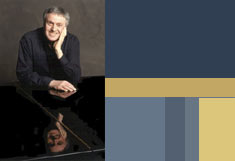
Michael Jones is leadership educator, writer and pianist/composer.
He is the author of two books exploring leadership artistry
and community and is also known for his many recordings of original
compositions for solo piano. Michael is on the executive leadership
faculties at The Banff Centre in Calgary Alberta and the University
of Texas, San Antonio .He speaks on the relationship between
leadership and creativity across North America.
© July 2010 Michael Jones - Pianoscapes.com
|